Rapunzel

Paul O. Zelinsky, Author & Illustrator

  1. BIBLIOGRAPHY

Zelinsky, Paul O. 1997. RAPUNZEL. New York: Dutton Children’s Books. ISBN 9780525456070.

2.  PLOT SUMMARY

Paul O. Zelinsky’s retelling of RAPUNZEL follows the traditional fairy tale of a girl who is taken from her parents at birth and raised by a sorceress in a tower. As Rapunzel grows, her hair becomes longer and the only way the sorceress can enter the tower. When a prince passes by and hears her singing, he discovers how to reach her, and they both fall in love. After the sorceress becomes aware of their meeting, they are separated, and both suffer before they are reunited and build their future. 

3. CRITICAL ANALYSIS

The retelling of the story keeps the structure and tone of the traditional tale that includes longing, danger, and separation. The isolation of Rupenzel is the center of the story, while the tower becomes the place of protection and imprisonment. When she finally meets her prince, she has a connection to the outside world, but also the start of her conflict and punishment for having that connection.

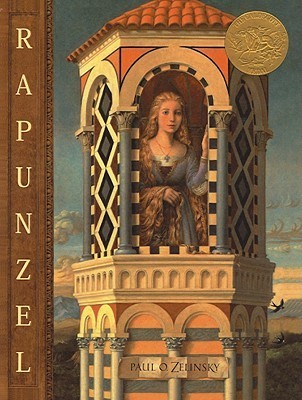
The illustrations themselves are a set of oil paintings that give the book a sense of Renaissance-inspired visual style. The artwork gives almost a grand and sacred feel. It is different from the normal cartoon-like images that picture books. They do a good job of communicating emotions such as Rapunzel’s loneliness, the sorceress’s power, and the prince’s longing. The text and illustrations work well together in retelling the traditional tale.

4. REVIEW EXCERPT(S)

Penguin Random House – “As ever, and yet always somehow in newly arresting fashion, Paul O. Zelinsky’s work thrillingly shows us the events of the story while guiding us beyond them to the truths that have made it endure.”

5. CONNECTIONS

  • A good book to introduce students to traditional fairy tales and how stories change over time through cultures and authors. It can be used in a compare and contrast with other retellings of this story.
  • Students can examine the illustrations before reading the text. 
  • Related Books:

Zelinsky, Paul O. RUMPELSTILTSKIN. ISBN 9780525442653.
Zelinsky, Paul O. HANSEL AND GRETEL. Retold by Rika Lesser. ISBN 9780525461524.
Pinkney, Jerry. THE UGLY DUCKLING. ISBN 9780688159320.
Beautiful Blackbird

Ashley Bryan, Author & Illustrator

  1. BIBLIOGRAPHY

Bryan, Ashley. 2003. BEAUTIFUL BLACKBIRD. New York: Atheneum Books for Young Readers. ISBN 9780689847318.

2.  PLOT SUMMARY

BEAUTIFUL BLACKBOARD is the beautiful retelling of a Zambian folktale about a group of colorful birds who admire the beauty of Blackbird. The other birds are a bright shade of reds, yellows, greens, blues, and purples, and they believe that Blackbird is the most beautiful because of his beautiful, deep black color. In their awe, they ask Blackbird to share some of his black coloring with them, and he then paints markings on their feathers. As he does so, he reminds them that their true beauty comes from within, not from the outside. They celebrate the beauty that black adds to their outward appearance. 

3. CRITICAL ANALYSIS

This tale works well as a folktale because of its use of repetition, rhythm, animal character, and direct lesson. It is the tale of why birds may have many black markings, but it also carries the significance of beauty, identity, and self-worth. It creates a celebration of the Blackbird and its black color as something beautiful, valuable, and desirable. The book draws a powerful conversation on the importance of embracing one’s identity, culture, and values, and recognizing the many forms of beauty. 

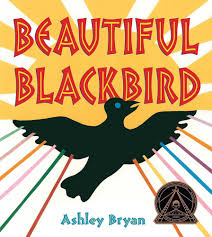
The illustrations of the book play a significant role as the bright colors and dark black are essential to the storyline. Throughout the book, the birds look lively and joyful, and the transition of when they gain their black color is evident. It is a deep contrast that adds pattern and beauty to the other birds. 

4. REVIEW EXCERPT(S)

School Library Journal – “This unusual and little-known pourquoi tale may supplement larger collections and serves as a thoughtful and entertaining addition to units on self-esteem.”

Publishers Weekly – “Bryan’s lilting and magical language is infectious.”

5. CONNECTIONS

  • Students can read this book in a classroom setting and then participate in a collage bird-making art world in which they can then add their own black markings. They can then share and tell what makes their bird unique. 
  • Related Books:

Bryan, Ashley. LET IT SHINE: THREE FAVORITE SPIRITUALS. ISBN 9780689847325.
Bryan, Ashley. THE DANCING GRANNY. ISBN 9780689711589.
Morales, Yuyi. JUST A MINUTE: A TRICKSTER TALE AND COUNTING BOOK. ISBN 9780811837583.

Finding Winnie

Lindsay Mattick, Author

Sophie Blackall, Illustrator

  1. BIBLIOGRAPHY

Mattick, Lindsay. 2015. FINDING WINNIE: THE TRUE STORY OF THE WORLD’S MOST FAMOUS BEAR. Ill. by Sophie Blackall. New York: Little, Brown Books for Young Readers. ISBN 9780316324908. 

2.  PLOT SUMMARY

Finding Winnie is the true story behind the bear that inspired the Winnie-the-Pooh adventures. The book begins as a story told by Lindsey to her son, Cole. She introduces Harry, a veterinarian and soldier who purchased a cub from a train station on his way to his post. He named the bear Winnipeg, Winnie for short, after the town he was from. The cub traveled with him and his unit but eventually ended up in the London Zoo. This is where Winnie would meet Christopher Robin, which would draw the inspiration for the Winnie-the-Pooh stories.

3. CRITICAL ANALYSIS

Finding Winnie is a blend of history, biography and storytelling through the intimate retell of the life of Winnie-the-Pooh. Lindsay Mattick, paves a intimate narrative between a mother and her son which seem like just the telling of a random bed time story. However, as the story progresses, the family tree is shared and the connections of the story are drawn to emphasis the importance of this story. 

The illustrations of this book support the emotional and historical layers of the story line. It is detailed, intimate, and nostalgic to draw readers to move through the various timelines of the story. The illustration of the cub is done wit the intention of keeping a nonfiction perspective but also blending in with the cartoonish personality. 

4. REVIEW EXCERPT(S)

School Library Journal – “A perfect melding of beautiful art with soulful, imaginative writing, this lovely story, penned by Colebourn’s great-great granddaughter, is ideal for sharing aloud or poring over individually. VERDICT Children everywhere will enjoy this tale for years. A must-have.”

5. CONNECTIONS

  • A book that can be used for narrating nonfiction, history, and the real stories behind fictional characters.
  • Other Winnie-the-Pooh books:

Milne, A. A. WINNIE-THE-POOH. ISBN 9780525444435

Walker, Sally M. WINNIE: THE TRUE STORY OF THE BEAR WHO INSPIRED WINNIE-THE-POOH. ISBN 9780805097153Appelt, Kathi. MISS LADY BIRD’S WILDFLOWERS. ISBN 9780060011071

Where the Wild Things Are

Maurice Sendak, Author & Illustrator

  1. BIBLIOGRAPHY

Sendak, Maurice. 1963. WHERE THE WILD THINGS ARE. Ill. by Maurice Sendak. New York: Harper & Row. ISBN 9780060254926. 

2.  PLOT SUMMARY

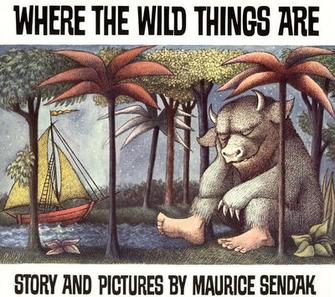
Max, a boy who loves his wolf suit and loves to cause mischief in the comfort of his home. The mischief led to no supper and was sent straight to his room as a consequence. In his room, a forest begins to grow, and Max sails away to the land of Wild Things. He becomes king of the Wild Things and tames them as a king would, in confidence and heavy imagination. In due time, Max grew tired of his duties and longed to be home where he wouldn’t be lonely. He sails back to the reality of his room, where he finds supper waiting for him, still hot.

3. CRITICAL ANALYSIS

Sendak’s story is one of mischief, imagination, and returning to the things that matter. It touches on the emotional capacities of a childhood, in which the character experiences anger, adventure, power, imagination, loneliness, and a need to return home. 

The text is straight to the point, but the illustrations allow for the imagination of the land of the Wild Things to come alive. The transition between the reality of his room and the imagination of a forest where monsters live is smoothly handled to show the emotional journey Max undergoes. 

4. REVIEW EXCERPT(S)

“Each word has been carefully chosen, and the simplicity of the language is quite deceptive.” ―School Library Journal

Library Journal voted Where the Wild Things Are as the number one picture book in 2012.

5. CONNECTIONS

  • A perfect book to discuss emotions that children might feel when encountering anger, imagination, and loneliness. 
  • Children can draw their own “wild thing” to engage in their imagination.
  • Other Books: 

Viorst, Judith. ALEXANDER AND THE TERRIBLE, HORRIBLE, NO GOOD, VERY BAD DAY. ISBN 9780689711732

Sendak, Maurice. IN THE NIGHT KITCHEN. ISBN 978006026668