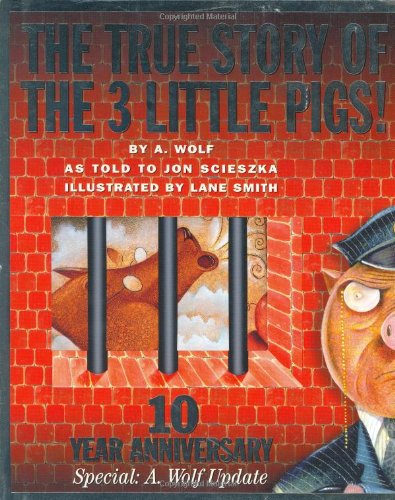
The True Story of the 3 Little Pigs!

Jon Scieszka, Author

Lane Smith, Illustrated

  1. BIBLIOGRAPHY

Scieszka, Jon. 1989. THE TRUE STORY OF THE 3 LITTLE PIGS! Ill. by Lane Smith. New York: Viking Books for Young Readers. ISBN 9780670827596.

2.  PLOT SUMMARY

THE TRUE STORY OF THE 3 LITTLE PIGS!, is a retelling of the familiar story of “The Three Little Pigs”, from the wolf’s point of view. Alexander T. Wolf retells his story as a claim of innocence, stating that he was not “big and bad” but simply misunderstood. His demise came from the simple need for a cup of sugar to bake a cake for his grandmother and his cold that caused him to sneeze away his neighbors’ homes. He becomes the unmistakable villain in this story and simply tries to prove his innocence to the reader and the author. 

3. CRITICAL ANALYSIS

This picture book takes the story of a well-known fairytale and turns it upside down in a clever and humorous way. The narration is taken over by the wolf himself in order to clear his name once and for all. By setting his personality as being someone who is polite, reasonable, and innocent, the writing of this book almost lets you believe the world itself is innocent. 

The illustration in this book is essential to the humor Scieszka conveys. It is relative to a dark and gothic newspaper-like illustration that feeds into the tabloid or crime investigation aesthetic. Smith gives the wolf a look of innocence through his charming and put-together wardrobe and accessories. 

This book allows the reader to immerse themselves as someone on the jury and hear the other side of the story. Will they side with the wolf? Or will the stay true to the original story of “The Three Little Pigs”?

4. REVIEW EXCERPT(S)

  • The True Story of the 3 Little Pigs is #35 on School Library Journal’s list “Top 100 Picture Books” of all time. 
  • The Big Bad Wolf tells his side in this fractured fairy tale, brought to life with irreverent storytelling and artwork that “older kids (and adults) will find very funny” (School Library Journal).

5. CONNECTIONS

  • This story would pair well with the traditional version of “The Three Little Pigs”. When both books are read, you can draw a comparison between the two stories and have a discussion on which one seems more probable. 
  • Related books:

Wiesner, David. THE THREE PIGS. ISBN 9780618007011.

Scieszka, Jon. THE STINKY CHEESE MAN AND OTHER FAIRLY STUPID TALES. Ill. by Lane Smith. ISBN 9780670844876.

Finding Winnie

Lindsay Mattick, Author

Sophie Blackall, Illustrator

  1. BIBLIOGRAPHY

Mattick, Lindsay. 2015. FINDING WINNIE: THE TRUE STORY OF THE WORLD’S MOST FAMOUS BEAR. Ill. by Sophie Blackall. New York: Little, Brown Books for Young Readers. ISBN 9780316324908. 

2.  PLOT SUMMARY

Finding Winnie is the true story behind the bear that inspired the Winnie-the-Pooh adventures. The book begins as a story told by Lindsey to her son, Cole. She introduces Harry, a veterinarian and soldier who purchased a cub from a train station on his way to his post. He named the bear Winnipeg, Winnie for short, after the town he was from. The cub traveled with him and his unit but eventually ended up in the London Zoo. This is where Winnie would meet Christopher Robin, which would draw the inspiration for the Winnie-the-Pooh stories.

3. CRITICAL ANALYSIS

Finding Winnie is a blend of history, biography and storytelling through the intimate retell of the life of Winnie-the-Pooh. Lindsay Mattick, paves a intimate narrative between a mother and her son which seem like just the telling of a random bed time story. However, as the story progresses, the family tree is shared and the connections of the story are drawn to emphasis the importance of this story. 

The illustrations of this book support the emotional and historical layers of the story line. It is detailed, intimate, and nostalgic to draw readers to move through the various timelines of the story. The illustration of the cub is done wit the intention of keeping a nonfiction perspective but also blending in with the cartoonish personality. 

4. REVIEW EXCERPT(S)

School Library Journal – “A perfect melding of beautiful art with soulful, imaginative writing, this lovely story, penned by Colebourn’s great-great granddaughter, is ideal for sharing aloud or poring over individually. VERDICT Children everywhere will enjoy this tale for years. A must-have.”

5. CONNECTIONS

  • A book that can be used for narrating nonfiction, history, and the real stories behind fictional characters.
  • Other Winnie-the-Pooh books:

Milne, A. A. WINNIE-THE-POOH. ISBN 9780525444435

Walker, Sally M. WINNIE: THE TRUE STORY OF THE BEAR WHO INSPIRED WINNIE-THE-POOH. ISBN 9780805097153Appelt, Kathi. MISS LADY BIRD’S WILDFLOWERS. ISBN 9780060011071

Where the Wild Things Are

Maurice Sendak, Author & Illustrator

  1. BIBLIOGRAPHY

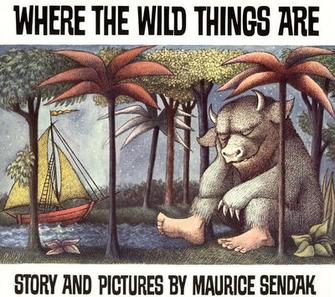
Sendak, Maurice. 1963. WHERE THE WILD THINGS ARE. Ill. by Maurice Sendak. New York: Harper & Row. ISBN 9780060254926. 

2.  PLOT SUMMARY

Max, a boy who loves his wolf suit and loves to cause mischief in the comfort of his home. The mischief led to no supper and was sent straight to his room as a consequence. In his room, a forest begins to grow, and Max sails away to the land of Wild Things. He becomes king of the Wild Things and tames them as a king would, in confidence and heavy imagination. In due time, Max grew tired of his duties and longed to be home where he wouldn’t be lonely. He sails back to the reality of his room, where he finds supper waiting for him, still hot.

3. CRITICAL ANALYSIS

Sendak’s story is one of mischief, imagination, and returning to the things that matter. It touches on the emotional capacities of a childhood, in which the character experiences anger, adventure, power, imagination, loneliness, and a need to return home. 

The text is straight to the point, but the illustrations allow for the imagination of the land of the Wild Things to come alive. The transition between the reality of his room and the imagination of a forest where monsters live is smoothly handled to show the emotional journey Max undergoes. 

4. REVIEW EXCERPT(S)

“Each word has been carefully chosen, and the simplicity of the language is quite deceptive.” ―School Library Journal

Library Journal voted Where the Wild Things Are as the number one picture book in 2012.

5. CONNECTIONS

  • A perfect book to discuss emotions that children might feel when encountering anger, imagination, and loneliness. 
  • Children can draw their own “wild thing” to engage in their imagination.
  • Other Books: 

Viorst, Judith. ALEXANDER AND THE TERRIBLE, HORRIBLE, NO GOOD, VERY BAD DAY. ISBN 9780689711732

Sendak, Maurice. IN THE NIGHT KITCHEN. ISBN 978006026668

Don’t Let the Pigeon Drive the Bus! 

Mo Williams, Author & Illustrator

  1. BIBLIOGRAPHY

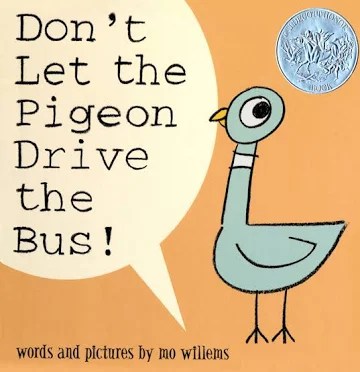
Willems, Mo. 2003. DON’T LET THE PIGEON DRIVE THE BUS! Ill. by Mo Willems. New York: Hyperion Books for Children. ISBN 9780786819881. 

2.  PLOT SUMMARY

A bus driver steps away from his bus with one simple instruction left for the reader, don’t let the pigeon drive the bus! The pigeon makes his debut and immediately starts to beg the reader to allow them to drive the bus. It goes from begging to whining, to bargaining, to throwing a full tantrum when they are not allowed to drive the bus. The reader becomes a part of the story through page interaction and essentially is called to deny the request of a very dramatic pigeon. When the bus driver finally returns, the pigeon is defeated in their request to drive the bus. However, a truck comes around, and the pigeon has now found a new desire.

3. CRITICAL ANALYSIS

DON’T LET THE PIGEON DRIVE THE BUS! Is a engaging book that introduces humor, real world scenarios and active audience participation. The reader was given an instruction and engages with the pigeon throughout the book to ensure that he does not infact drive the bus. This book is effective for younger readers because it allows them to be respond to the narrative, laugh and have some decision making input throughout the story. The dialogue is composed of short responses such as you would have in conversation with a child. There is a range of exaggeration on how the pigeon responds to not being allow to do what their hearts biggest desire is, to drive the bus. 

The illustrations to the book are simple, however, the pigeon wears some very expressive emotions throughout the story. You are able to see the his desire to drive the bus and the sneakiness of trying to convince the reader to allow them to take the wheel. His attitude shifts to direct rage and defeat when the bus driver finally returns and he was in fact not allowed to drive the bus. 

4. REVIEW EXCERPT(S)

Publishers Weekly: “The premise of this cheeky debut is charmingly absurd. Willems hooks his audience quickly with the pigeon-to-reader approach and minimalist cartoons. The bluish-gray bird expresses countless, amusing emotions through tiny shifts in eye movement or wing position.”

Reformed Perspective: “The Pigeon uses every excuse you’ve ever heard a child use: ‘I never get to do anything!’…”

5. CONNECTIONS

  • This book can be used with children during storytime to discuss the importance of making wise choices, following instructions, and “no means no”. 
  • Related Mo Williams books:

Willems, Mo. THE PIGEON FINDS A HOT DOG! ISBN 9780786818693

Willems, Mo. KNUFFLE BUNNY: A CAUTIONARY TALE. ISBN 9780786818709

Willems, Mo. EDWINA, THE DINOSAUR WHO DIDN’T KNOW SHE WAS EXTINCT. ISBN 9780786837489